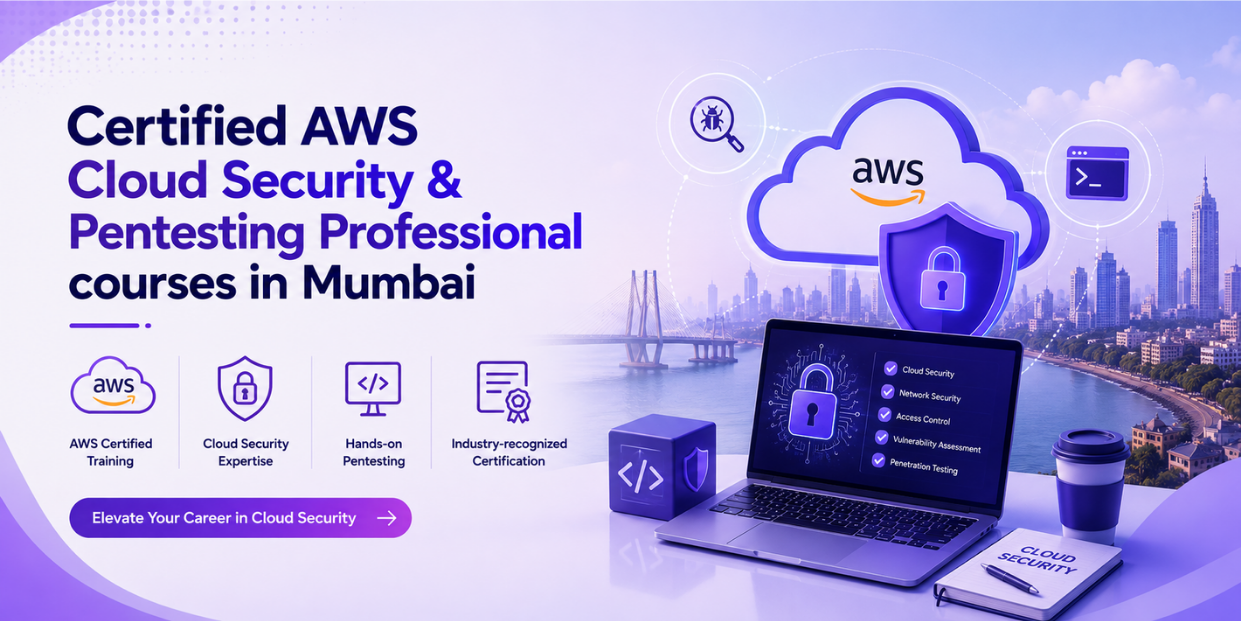
If you've been searching for certified AWS cloud security & pentesting professional courses in Mumbai, you're likely trying to figure out which program actually prepares you for real-world cloud threats, not just another certificate to add to your resume. This guide breaks down everything you need to know: what these courses cover, why Mumbai has become a hub for cybersecurity training, and how to pick the right one.
Why Cloud Security and Pentesting Skills Matter Right Now
Cloud adoption in India has exploded, and Amazon Web Services remains the dominant platform for enterprises, startups, and government projects alike. But with that growth comes a widening skills gap. Companies need professionals who can not only deploy AWS infrastructure but also secure it and actively test it for vulnerabilities.
This is exactly where AWS cloud security and pentesting professional courses in Mumbai come in. They combine two disciplines that used to be taught separately: cloud architecture security and offensive penetration testing into one practical skill set. Employers are no longer satisfied with candidates who understand security theory; they want people who can identify misconfigurations, exploit weaknesses ethically, and remediate issues before attackers do.
What Does an AWS Cloud Security & Pentesting Course Actually Cover?
A well-structured, certified program typically includes:
- AWS Identity and Access Management (IAM) understanding roles, policies, and privilege escalation risks
- Cloud network security VPC configuration, security groups, NACLs, and traffic monitoring
- S3 bucket security one of the most common misconfiguration points exploited in real breaches
- Penetration testing methodology reconnaissance, scanning, exploitation, and reporting, adapted for cloud environments
- AWS-specific attack vectors metadata service exploitation, Lambda function abuse, and container security gaps
- Compliance frameworks mapping security controls to standards like ISO 27001, SOC 2, and India's own data protection guidelines
- Incident response in cloud environments detecting and containing breaches using AWS-native tools like GuardDuty and CloudTrail
- Hands-on labs simulated environments where learners perform actual penetration tests, not just theoretical walkthroughs
If a course you're considering skips the hands-on labs, that's a red flag. Real cloud security work depends on muscle memory, and reading about an attack is very different from executing one in a controlled lab.
Why Mumbai Is Becoming a Preferred Training Destination
Mumbai's position as India's financial and technology capital makes it a natural fit for advanced cybersecurity education. Several factors are driving demand for AWS pentesting courses in Mumbai specifically:
- Proximity to enterprise clients Mumbai hosts major BFSI (banking, financial services, and insurance) companies that are prime targets for cyberattacks, creating strong local demand for skilled defenders.
- Growing IT and fintech ecosystem Startups and established firms alike are migrating to AWS, increasing the need for in-house or consultant-level cloud security talent.
- Access to experienced trainers Many instructors in Mumbai bring direct industry experience from red team engagements, SOC operations, and cloud architecture roles.
- Networking opportunities Training in a major hub connects learners with peers, mentors, and potential employers in a way remote-only learning often can't replicate.
How to Choose the Right Certified Course
Not all programs labeled "AWS security certification" deliver the same depth. Here's what to evaluate before enrolling:
Instructor credentials. Look for trainers who hold recognized certifications such as AWS Certified Security Specialty, OSCP, or CEH, combined with actual field experience not just teaching experience.
Lab-to-lecture ratio. A strong course leans heavily toward practical labs. If the syllabus is mostly slides, keep looking.
Placement and mentorship support. Some institutes offer career guidance, mock interviews, and portfolio-building help alongside technical training, a meaningful differentiator if you're transitioning into cybersecurity.
Curriculum updates. AWS services and attack techniques evolve constantly. A course last updated two years ago may already be teaching outdated defenses.
Real-world case studies. Programs that walk through actual breach post-mortems (like misconfigured S3 buckets exposing millions of records) tend to build sharper intuition than purely theoretical instruction.
One training provider that has built a reputation around this hands-on, industry-aligned approach is Mrweb Secure, which structures its AWS cloud security and pentesting curriculum around live lab simulations and real breach scenarios rather than static presentations. For learners in Mumbai comparing options, this kind of practical orientation is worth prioritizing regardless of which institute you ultimately choose.
Who Should Enroll in These Courses?
These programs typically suit:
- IT professionals transitioning into cybersecurity or cloud security specifically
- System administrators who manage AWS infrastructure and want to add security expertise
- Freshers with a technical background aiming to enter cybersecurity through a specialized, high-demand niche
- Penetration testers looking to extend their skill set from traditional network/web app testing into cloud environments
- Compliance and GRC professionals who need technical fluency to assess cloud risk accurately
Career Outcomes After Certification
Professionals completing certified AWS cloud security and pentesting training in Mumbai commonly move into roles such as:
- Cloud Security Engineer
- AWS Security Specialist
- Penetration Tester (Cloud Focus)
- Security Consultant
- SOC Analyst with cloud specialization
- DevSecOps Engineer
Given the shortage of qualified cloud security talent across India, certified professionals with demonstrable, hands-on skills are often able to negotiate stronger offers and faster career progression compared to generalist IT candidates.
Final Thoughts
Choosing the right certified AWS cloud security & pentesting professional course in Mumbai comes down to prioritizing hands-on learning, current curriculum, and instructors with genuine field experience. As cloud infrastructure becomes the backbone of nearly every industry, professionals who can both build and break AWS environments ethically and skillfully will remain in high demand for years to come.
Frequently Asked Questions
Q1: What is an AWS cloud security and pentesting course?
It's a specialized training program that teaches learners how to secure AWS cloud infrastructure and simulate real-world attacks against it, combining defensive cloud security practices with offensive penetration testing techniques.
Q2: Do I need prior AWS experience before enrolling?
Basic familiarity with AWS services (EC2, S3, IAM) is helpful, but many courses in Mumbai include foundational modules for learners transitioning from general IT or networking backgrounds.
Q3: How long does it take to complete a certified course?
Duration varies by institute, typically ranging from a few weeks for intensive bootcamp-style programs to a few months for comprehensive courses covering both theory and extensive hands-on labs.
Q4: Is a pentesting certification the same as an AWS certification?
No. AWS certifications (like AWS Certified Security Specialty) validate cloud knowledge issued by Amazon, while pentesting certifications validate offensive security skills. A strong course often prepares you for both, or bridges the two.
Q5: Are these courses worth it for career switchers?
Yes, particularly because cloud security remains one of the most in-demand and under-supplied specializations in cybersecurity today, making it a strong entry point even for those without a traditional security background.
Q6: What makes Mumbai a good location to study this?
Mumbai's concentration of enterprise clients, fintech companies, and experienced security professionals creates a strong local ecosystem for both learning and job placement after certification.